New blueprint will help countries detect disease threats before they become conservation or public health crises
Read the WCS News Release HERE
Bronx , New York | October 01, 2026
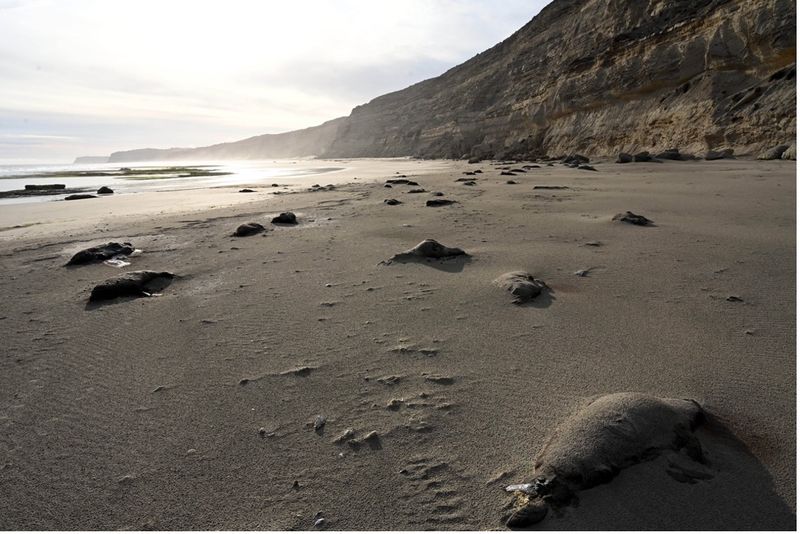 Photo above: Dead elephant seal pups spread on an extended Argentine beach of coastal Patagonia. Adults abandoned the breeding area. There are only carcasses in a coast that should have congregated thousands of reproductive females and males. Photo credit: ©Maxi Jonas.
The Wildlife Health Intelligence Network (WHIN) has published three complementary papers outlining a global roadmap for strengthening wildlife health surveillance and addressing critical gaps in countries’ ability to detect and respond to emerging disease threats.
Previous research found that nearly 60% of 107 countries surveyed showed no evidence of a functional wildlife health surveillance system, leaving wildlife populations, ecosystems, agriculture, and human health vulnerable to disease outbreaks. The new research identifies six priorities for building sustainable, locally led surveillance programs, including dedicated funding, political support, shared technologies and data standards, workforce training, and stronger international collaboration. A practical needs assessment tool, piloted in Thailand and Rwanda, also helps countries evaluate existing capacity and identify gaps.
As study co-author Sarah Olson, director of health at the Wildlife Conservation Society, explained to Mongabay, “The challenge now is scaling efforts and expertise through a global community of practice — no single organization can meet this need alone, and the more we collaborate, the faster surveillance can grow everywhere.” Together, the papers make the case for treating wildlife health surveillance as essential infrastructure for biodiversity conservation, One Health, and global health security.
Further reading and related coverage:
Mongabay: Wildlife disease surveillance at global scale needs stronger local networks, study
Wildlife Conservation Society on LinkedIn: Wildlife Health Surveillance a Global Imperative for Conservation and Health Security