Researchers find that illegal cattle movements, wildlife infections, and protected-area risks are interconnected challenges requiring a broader One Health response.
Read the WCS News Release HERE
Read the Study HERE
Previous WCS Statement on Illegal Cattle Trafficking and Screwworm HERE
New York , NY | July 02, 2026
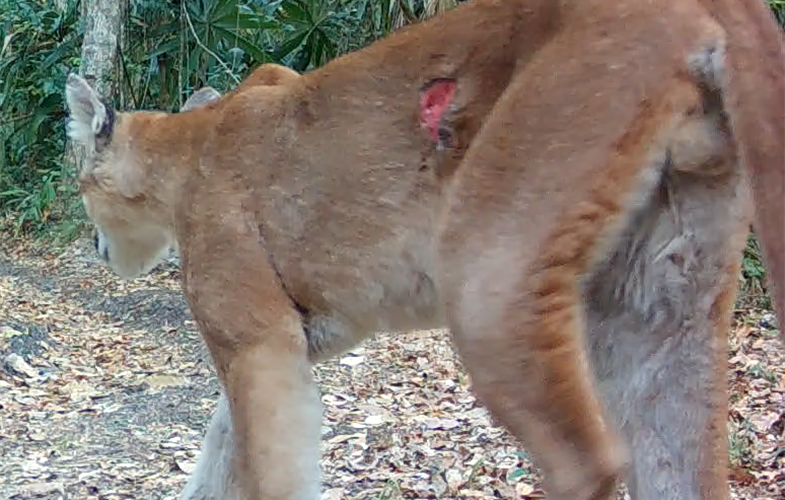 A pumas (Puma concolor) presenting wounds consistent with New World screwworm (Cochliomyia hominivorax) myiasis. Photo credit: ©️WCS Guatemala.
Strengthening wildlife surveillance will be critical to an effective U.S. response to New World screwworm, providing essential information on the parasite’s distribution, impacts on wildlife populations, and broader risks to biodiversity and ecosystem health.
Although wildlife infections have recently been detected in the United States, the relatively low number of confirmed cases may reflect gaps in existing surveillance rather than the true extent or geographic distribution of infestations.
Expanding monitoring beyond livestock to include wildlife populations, protected areas, and remote landscapes often overlooked by conventional surveillance networks will be essential to detecting emerging infections earlier, assessing population- and ecosystem-level impacts, and informing coordinated One Health prevention and control efforts.
A recent study by WCS and partners in Mesoamerica demonstrates the value of integrated wildlife surveillance in understanding the spread and potential impacts of the parasite. New World screwworm (Cochliomyia hominivorax) has reemerged across Mesoamerica, with nearly 100,000 cases reported in domestic animals and hundreds in people. The study documents confirmed wildlife infestations in four countries, including endangered Baird’s tapirs, as well as suspected cases in pumas. These findings demonstrate that the outbreak extends beyond livestock and poses a potentially significant threat to biodiversity and ecosystem health.
The authors highlight that reported wildlife cases likely underestimate the true extent of infestation because of substantial gaps in wildlife health surveillance. For the United States, this underscores the need to integrate wildlife monitoring into existing screwworm surveillance and eradication efforts, particularly along the U.S.–Mexico border. Such monitoring can help identify emerging areas of infestation, improve understanding of parasite ecology and potential spread, assess conservation impacts, and evaluate control measures, including sterile insect releases. The study also highlights uncontrolled livestock movements as a potential driver of reintroduction and spread. A coordinated One Health approach encompassing wildlife, livestock, and human health will therefore be essential to preventing further northward spread and sustaining screwworm elimination in the United States.